
Dear Brett…
On Youth Sports, Aristotle and the fine line between support and subservience.

Dear Brett,
It was so good to see you last week. I know you crammed a whole lot of action into a single day in town, so I really appreciate you squeezing me into the schedule. How good was that Bahn Mi? I love that place. Anyway, I hope you had a good time at the show — did you meet Aimee Mann? — and got home safe. You seemed a little embarrassed to admit that you drove into town to see a show by yourself, but I think it’s awesome that you did. As long as your wife and kids were cool with it, why not? I mean, you only get so many chances to do the things you want to in life and one night for yourself is not only not a big deal for a guy who is so involved and supportive of your family, but also an investment in being a better version of that guy.
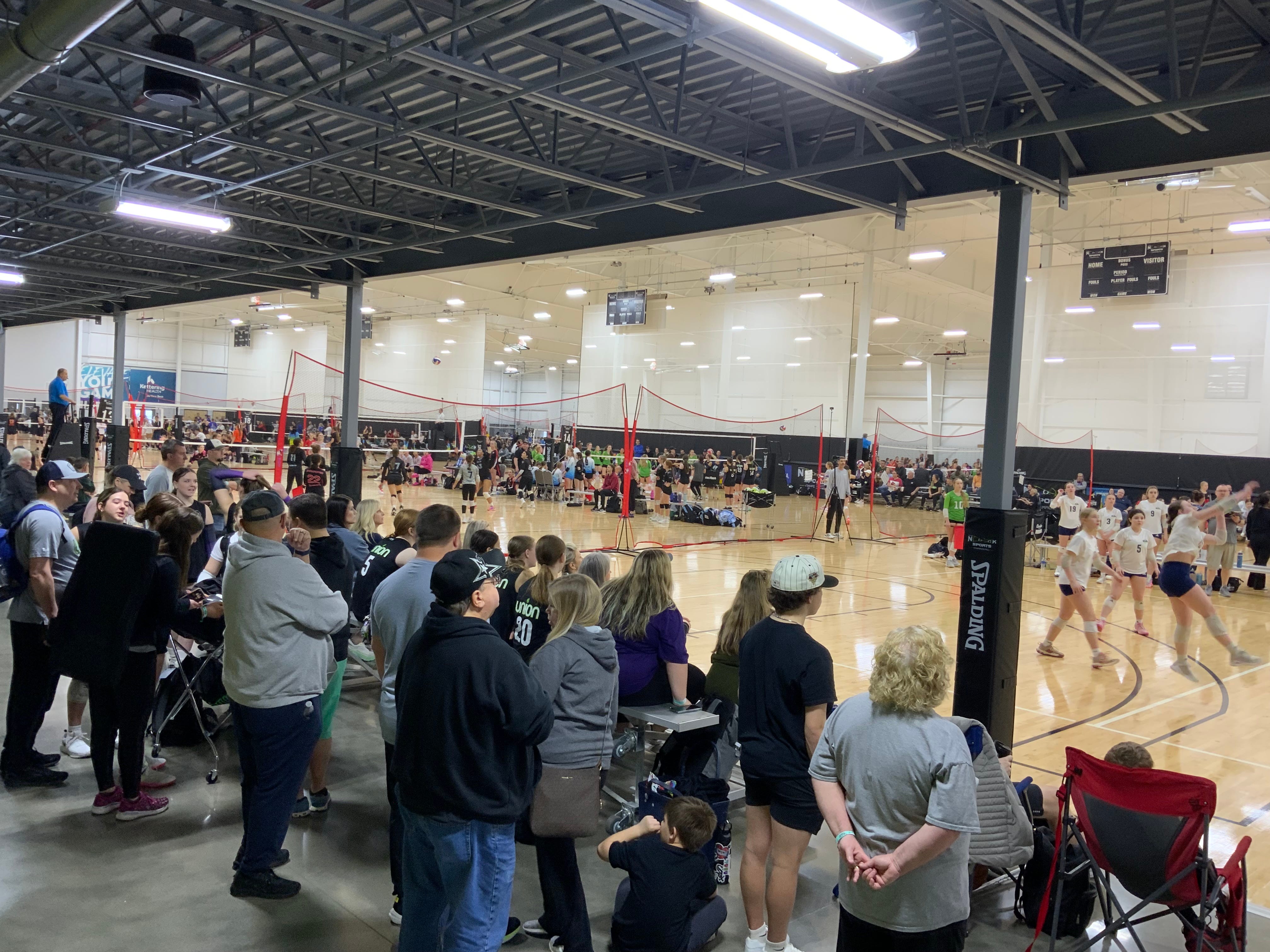
I’ve been thinking you little solo trip a lot the last couple of days. Your kids are just coming to the age when youth sports goes from “something for them to try” and “it keeps them busy — they can’t just be around the house all the time” to “team fees are due and we probably don’t need a new roof anyway” and “it’s the first week of the season, darling, I see you in five months.” As you know, I spend a lot of time at youth sporting events. In fact, I’m writing this on my iPad, sitting on the hard concrete floor of a former steel mill-turned-volleyball-emporia. The sun’s not even up yet and a few dozen matches are already underway. We were in the afternoon group yesterday, which means we got here just after lunch and pulled into home around 10, just to shower, repack bags, get some sleep and be out the door by 6:30 so my daughter could help ref the early game. The noise is deafening — I can barely make out Jack Johnson in my ear buds — the excitement is way higher than it should be for a Sunday morning and, honestly, there’s almost no place else I’d rather be.
My daughter’s 13, which means we’re just starting the club volleyball madness, but we’ve already been to tournaments in a half dozen states, including more than one requiring airfare. Couple that with two sons that play competitive baseball — one a sophomore in high school, the other a freshman in the middle of his first year of college baseball in North Carolina - and I shudder to think of the hours, days, months and tens of thousands of dollars we have invested in our kids’ athletics. And we have one more. He’s only six, but is already showing a love for baseball and basketball.
Lord help us.
Youth sports has clearly gotten out of hand. My parents and in-laws can’t believe the time and money we spend, the vacations we don’t take (unless there’s a tournament near a beach on a week when only one of the kids is playing, which this year, there is so I’m looking forward to the sun!) and how our kids’ passions have such an influence on our lives. They’re not wrong. The Youth Sports Industrial Complex is a money making machine — I highly recommend listening to “Playing to Win” by Michael Lewis on Audible, which dives deep into the economics of youth athletics — and the time commitment means in our family we have five seasons: Club Volleyball + School Baseball (spring), Club Volleyball + Club Baseball (spring/summer), Rest (usually about a week in late July/early August), School Volleyball + Fall Ball (roughly mid-August through late October) and Workouts + Madness (Halloween through New Years).
And some of the characters we’ve come across in more than a decade of club sports! There are team moms, the busy bodies, the distracted parents who never seem to get off their phones, the former hopefuls (parents who seem to be trying to relive their glory days through their children), the know-it-alls, the ones whose behavior on the sidelines or in the stands will definitely come up in future therapy sessions and so many more. My favorites are the ones who are there to be supportive without getting in the coaches’ players or officials’ way. They recognize good plays, even if by the other team, never berate or correct and offer high fives and hand shakes to anyone. My least favorite? The opposite. The people — okay, mostly dads — who think their team fees and $30 weekend admission give them the right to show everyone in the gym they are the alpha. They yell at everyone, especially the officials and their own kids and are toxic to be around. While some parents get into the games, but enjoy the team dinners more, these people seem to think that perfect performance is the only justification for love. I really don’t like being around these people. No one does and I feel especially for their kids.
All this has me thinking about Aristotle. Yeah, I know, he was a problematic genius who was wrong about an awful lot of stuff. He was super into slavery and had weird theories about how the universe works, but he also wrote a little book that changed my life and career a long time ago. In “Poetics,” he explores the nature and necessity of art and stories and, while I’ll spare you a long and awkwardly translated quote, its here where I came to really understand the relationship between objective and obstacle as the core tenant of not only good storytelling, but as a framework for making decisions and solving problems in life.
Plot is a sequence of events. Anecdotes are a retelling of something that’s already happened. Metaphor, simile, allegory and proverbs all help us explain lessons. But it’s the relationship between objective and obstacle that makes something a story. What does a character want and what stands in the way? Did they overcome obstacles to achieve their objective? That’s a comedy. Did they fail? That’s a tragedy.
I think about this a lot as it relates to youth sports. Ask players on the field or court what they want and they will say they want to have fun, they want to get better, maybe even that they want to win or play at a high level. They don’t really think about what stands in the way. They focus on their play, their training, things they need to do. Ask the parents in the stands and you’ll usually get some kind of eye roll or something about their kids having fun. Some of the more honest, if naive ones, will talk about scholarships. I’m going to break it to you now, unless your kids are showing signs of athletic dominance at an early age, the money you’ll spend on teams, tournaments and training is not likely going to pay for itself in scholarships. If they are freak athletes, chances are good you won’t be paying for this stuff anyway and their dominance won’t care about things like tryouts. They will win no matter what.
With my kids, I think I understand what they want out of sports. Jack wanted to work his butt off and have a chance to play in college — a good college where he could study finance and get a good job and one located in Southeast for the weather, the competition and experience. He checked all those boxes. Dylan also wants to play college ball, but my sense is that he is driven more by a sense of identity — how second child is that? — and wanting to prove himself capable. Molly loves volleyball. She loves playing, but also she loves being a part of something that is her own, where she fits in on her own terms.
Me? I want my kids to succeed, sure, and I want them to have fun. But my objectives have a more to do with the lessons they learn than the records they achieve, the stats they compile or even if they are smiling all the time. I wrote a little about this on my LinkedIn series “Free Story Tuesday” this week, but I think we can do a better job of measuring what really matters in youth sports.
It’s not about wins or losses, it’s about learning to be gracious in victory and being able to learn lessons from defeat without being defined by them.
It’s not about performance statistics, but about learning the tangible connection between the work you do when no one else is watching and how that impacts performance when it counts.
It’s not about fairness, but about being able to recognize setbacks that are out of your control and managing your response to them. The ump made a bad call, the other team made a great play, a teammate made a mistake — did you lose your mind about it or did brush it off and focus on what’s next?
These are the objectives of youth sports, as I see them, and the obstacles to all of them are the same — selfishness, ego, entitlement, putting too much pressure or value on a single outcome. I invest time and money into opportunities for my kids not to make them winners or get them noticed, but because I want to be able to see them learn these things. I can talk to them about hustle all day long, but if they do go hard to first base and are called out, they are going to understand it in ways no dad lecture ever can impart. And, if in that moment they throw their helmet or feel sorry for themselves, I know there are still obstacles to climb. But, if they turn, accept responsibility to themselves, acknowledge to their mistake to their coach and cheer on their teammates, I know they’ve learned things that will last long after the season and their playing career is done.
Older generations have a tendency to question how much time and money ours puts into our kids’ sports, but I think they might miss the fundamental objective I have as a parent — to bear witness to my children becoming better people. It’s not about the sports, it’s about the opportunity to learn. There are frustrations that go along with it and no question there are those who have built a marketplace to extort parental obligation, guilt and hope around youth sports. But I have a 19 year-old son who set a big goal for his life after high school and is living it. I have a 16 year-old son who gets up before dawn to lift weights, gets his homework done early so he can get some extra time in the batting cage and had learned to walk tall in the progress he’s made. I have a six year-old son who loves playing catch with me, can’t wait to shoot hoops or get out the tee to hit balls into a net in the garage. And I have a 13 year-old daughter who got up this morning on her own, got ready, packed her bags and got out the door before dawn with a smile on her face because she loves her team and didn’t want to least anyone down.
So, is it being supportive of my kids or subservient to their interests? To me, its an honor and privilege to see them become the people they are going to become and there’s no obstacle that could keep me from his hard floor in this noisy room on this early morning.
There’s no place in the world I’d rather be.
Talk to you soon, bud.
Craig